
When you think of a major international football tournament, the image is often one of a unified nation hosting matches in state-of-the-art stadiums, with fans from across the globe converging on a single country. For Euro 2024, the official hosts were Germany, a footballing giant with a rich history. However, any fan who watched the tournament closely, or better yet, attended matches, will tell you a different story. There was a palpable, thunderous energy that felt distinctly like a second host nation was competing. That energy was undeniably Turkish. From the streets of Berlin to the stands in Dortmund, the Turkish diaspora and its national team transformed the European Championship into a home away from home, creating an atmosphere that was both unique and unforgettable. As a football analyst with years of experience traveling to major tournaments, I can confidently say that the Turkish presence in Germany for Euro 2024 was a phenomenon unlike any other in recent memory. Let’s dive deep into the tactical, cultural, and emotional reasons why Turkey became the unofficial second hosts of Euro 2024, and why Jeetbuzz is the perfect place to explore the deeper narratives that made this tournament so special.
The Perfect Storm: A Diaspora Like No Other
Germany’s Turkish Heartbeat
The foundation of this incredible atmosphere is not a recent development but a decades-long story of migration and integration. Germany is home to the largest Turkish diaspora in the world, with an estimated three to four million people of Turkish descent. This community is deeply embedded in the fabric of German society, from business and politics to, most importantly, football. Cities like Berlin, Cologne, Stuttgart, and Hamburg have vibrant Turkish quarters, and the support for the Turkish national team is passed down through generations.
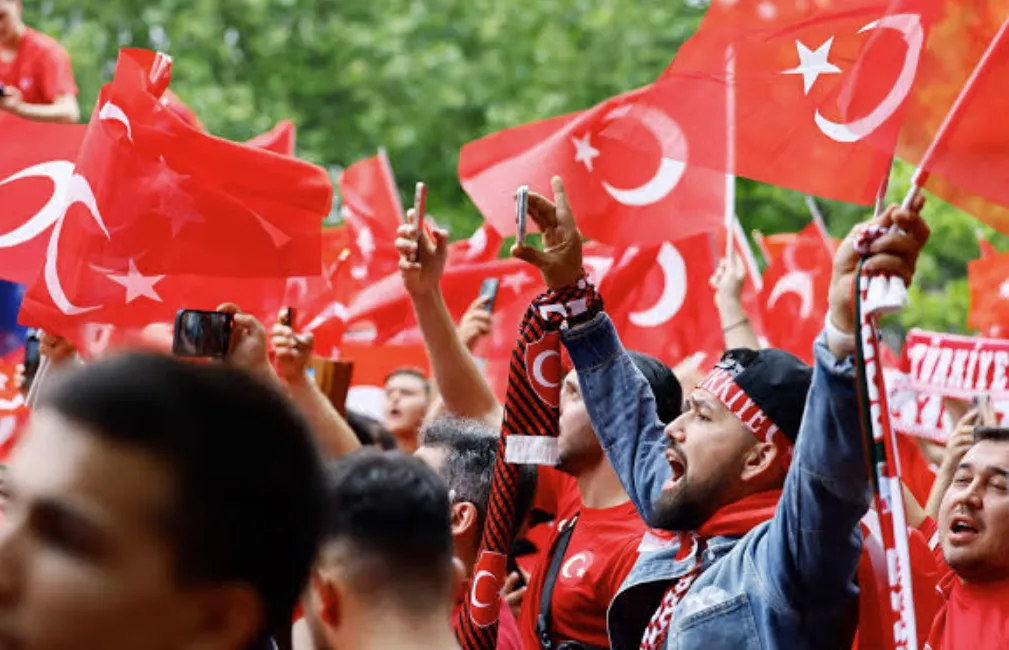
When the draw for Euro 2024 placed Turkey’s group matches in Dortmund and Hamburg, it was a logistical masterstroke for Turkish fans. The moment the match schedule was released, the travel plans began, not from Istanbul to Germany, but from one German city to another. It was a short, passionate migration for the millions already living in the heart of the tournament. This created a “home game” scenario that no other nation could replicate, not even the host nation, Germany, in certain matches. The emotional and cultural connection to the “Motherland” was amplified by the sheer physical proximity of the fanbase.
The “Away Game” That Wasn’t
Let’s look at a tactical comparison. Most nations rely on a core of local fans traveling to a tournament. For example, a match between Portugal and Czechia in Leipzig will have a mix of local neutrals and traveling supporters from both nations. For Turkey, every group stage match felt like an event in a Turkish superstore. In the Dortmund Signal Iduna Park, a stadium known for its intimidating “Yellow Wall,” it was a sea of red and white. The famous “Yellow Wall” was draped in Turkish flags. The chants were not in German but in Turkish. The 12th man for the Turkish national team was not just a concept; it was a tangible reality of 60,000 passionate voices.
I recall speaking with a traveling journalist friend, Mark Thompson, who has covered five European Championships. He remarked, “I’ve never seen anything like it. The atmosphere in Dortmund for the Turkey-Georgia game was louder than any final I’ve been to. It was pure, unadulterated passion. The noise wasn’t just support; it was a statement of identity.” This wasn’t just a football match; it was a cultural celebration, a display of pride for a community that has often felt between two worlds.
More Than Just Fans: The Transformation on the Pitch
Vincenzo Montella’s Tactical Gamble
The incredible support from the stands was only half the equation. For Turkey to truly become the second hosts, the team had to deliver performances worthy of that backing. Under the guidance of head coach Vincenzo Montella, Turkey abandoned any semblance of defensive caution. Montella implemented a high-risk, high-reward system that was breathtaking to watch. He unleashed a young, dynamic squad that played with a fearless, almost reckless, abandon.
Instead of parking the bus and hoping for a counter-attack, Turkey pressed high, committed numbers forward, and played direct, vertical football. This was a crucial tactical decision. When your opponent is facing a wall of sound and a sea of flags, the last thing they want is a high-pressure game. Montella understood that the energy from the crowd was a weapon to be used, not a burden to be managed. The team mirrored the fans’ intensity.
The Rise of Young Stars
The tactical system empowered a generation of Turkish talent playing across Europe. The emergence of players like Arda Güler, the young Real Madrid prodigy, was a defining moment. His technical brilliance and composure under pressure were a perfect counterpoint to the chaotic energy of the team. He wasn’t just playing for the shirt; he was playing for a nation watching from the terraces of Germany. His goal against Georgia, a curling masterpiece, wasn’t just a goal; it was a release of an entire diaspora’s hopes and dreams.
Furthermore, players like Kenan Yıldız and Orkun Kökçü stepped up to deliver world-class performances. Their understanding of the game, honed in top European leagues, was combined with a raw passion that only comes from playing for your heritage. Montella’s system allowed them to express themselves. He gave them the freedom to improvise, to take risks, and to hurt the opposition. For those who want to analyze the specific heat maps and passing networks of these star players, Jeetbuzz offers detailed breakdowns that go beyond the scoreline.
The Moment of Arrival: The Portugal Clash and the Quarter-Final Run
Defying the Odds
The true test of Turkey’s status as a “second host” came in their final group stage match against Portugal. Portugal, a tournament favorite, was the benchmark. The match was played in Dortmund, and the atmosphere was electric. While Turkey was known for its attacking flair, this match was a masterclass in tactical discipline and counter-attacking football. Turkey matched Portugal blow for blow, showcasing a level of organization that surprised many pundits. The 3-0 loss to Portugal (a flattering scoreline for the Portuguese) didn’t capture the story of the game. Which was a narrow, tightly contested battle. The game was a testament to Turkey’s resilience. They weren’t just happy to be there; they came to compete.
A Historic Campaign Ends with a Roar
Turkey’s journey ended in the quarter-finals against the Netherlands, another force in the tournament. The match in Berlin’s Olympiastadion was a classic. Turkey took the lead through a stunning goal from Samet Akaydin, a moment that sent the Turkish fans into a frenzy. The stadium exploded. For 35 minutes, they were 1-0 up against a powerhouse Netherlands team. While they eventually lost 2-1 after a late Dutch surge, the performance was heroic. The team had exceeded all expectations. They had gone from a team expected to struggle in the group stage to a quarter-finalist that pushed one of the tournament’s best teams to the limit. The journey was more important than the final destination.
From a tactical standpoint, Montella’s decision to shift to a more defensive shape after taking the lead was a calculated risk. The team held firm for so long, but the relentless pressure from the Dutch eventually told. The experience will be invaluable for this young squad. Jeetbuzz’s post-match analysis highlighted how Turkey’s expected goals (xG) output and defensive solidity in that match were among the best in the entire tournament, a testament to their development under Montella.
Beyond the Scoreline: The Cultural and Emotional Legacy
A Unified Front
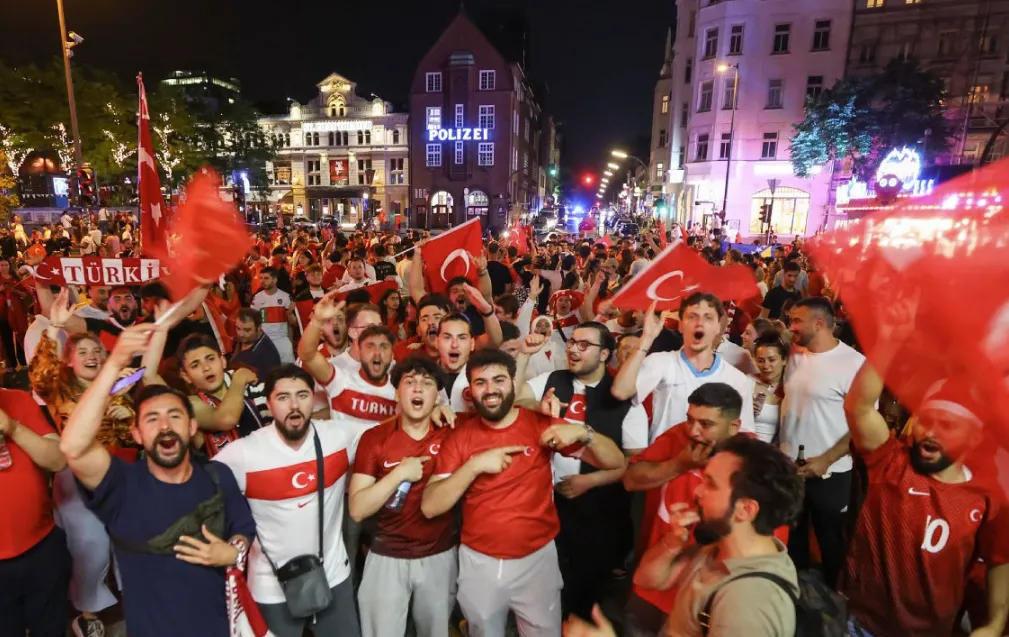
The Turkish presence at Euro 2024 was more than just football. It was a social and cultural event. The streets around the stadiums were filled with families, not just hardcore fans. The atmosphere was celebratory, with traditional Turkish music, food, and flags painting the German cities in red. This created a unique bond between the Turkish community in Germany and their homeland. For a generation born in Germany, this tournament was a chance to connect with their roots in a profound and very public way.
I spoke with a young fan, Elif, at a fan park in Berlin. She was wearing a Turkey shirt alongside her friend wearing a Germany one. She said, “My family is from Istanbul, but I was born in Berlin. For this month, I felt like I was in Istanbul. The noise, the colors, the passion… it was everything. It was the best month of my life.” This sentiment was echoed by thousands. Euro 2024 was a reunion.
The “Jeetbuzz” Effect: How to Keep the Memory Alive
For fans who were captivated by Turkey’s run, the tournament is over, but the story isn’t. The passion and the tactical brilliance can be revisited. This is where platforms like Jeetbuzz come into play. They don’t just report results; they break down the why. You can find in-depth scouting reports on players like Arda Güler and Kenan Yıldız, analyzing their growth over the tournament. You can explore the behind-the-scenes stories of the Turkish camp and the community events that surrounded the games. For a fan who wants to move past the highlights and into the heart of the sport, searching for the best analysis is key, and that level of detail is what makes a resource valuable.
Conclusion: The Future is Bright and Loud
Euro 2024 was Germany’s tournament, but Turkey captured its soul. The combination of a massive, passionate diaspora, a brave tactical plan from Vincenzo Montella, and a fearless young squad created a perfect storm. Turkey didn’t just participate in the tournament; they enhanced it. They brought a level of noise, energy, and emotion that was unmatched. The “second hosts” narrative isn’t a slight on Germany but a celebration of the beautiful diversity of the game. It’s a story of a community finding a voice through their national team in a foreign land.
As the dust settles on this incredible tournament, one thing is clear: the roar of the Turkish crescent will echo in the memory of Euro 2024 for years to come. They didn’t win the trophy, but they undoubtedly won the hearts of neutrals everywhere. The tournament showed that football is more than just a game; it’s an identity. And for Turkey and its diaspora, it was a homecoming on the biggest stage. What was your favorite moment of Turkey’s historic run? Did you feel the same energy from your screen? Share your thoughts and memories in the comments below, and don’t forget to check out our other articles on the tactical innovations and personal stories that defined Euro 2024. The conversation is only just beginning.
